Preparation (1 minute)
Before you begin — in bed, with the lights off.
- Put your phone away or switch on do-not-disturb.
- Lie on your back or side, whichever feels most comfortable.
- Close your eyes and let your body sink into the mattress.
 Свободни души
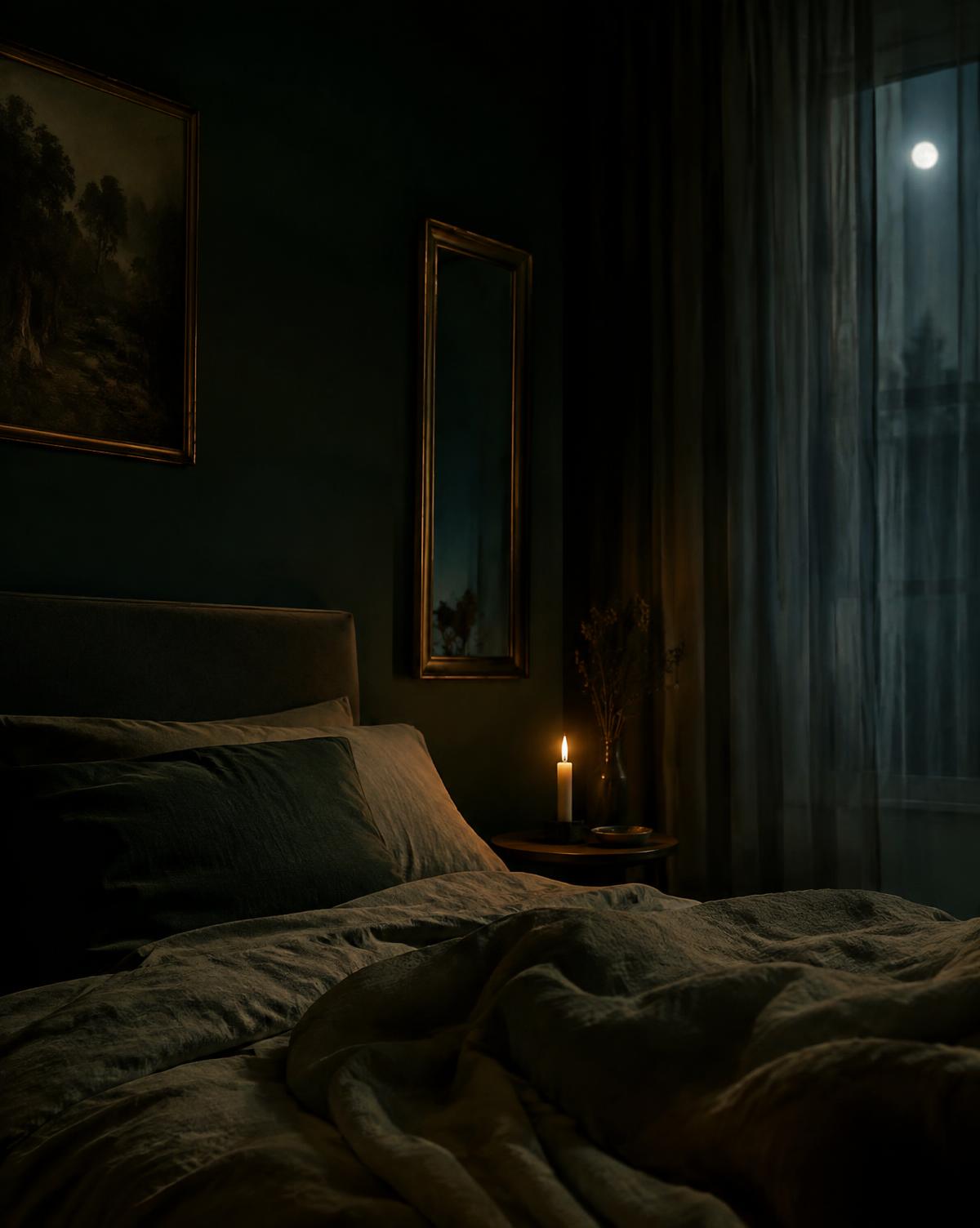
Sleep meditation
When the body is tired but the mind won't stop, sleep can't be forced. Sleep meditation helps the nervous system shift from wired tension to rest — slowly and gently.
Sleep isn't something we do — it's something that happens when we let go. The harder we try to fall asleep, the more awake we become. Sleep meditation doesn't aim to knock you out; it removes the tension that keeps sleep from arriving on its own.
The practice below combines slow breathing, a body scan and soft focus. It takes about 10 minutes and can be done in bed, in the dark. If you fall asleep halfway through — it's working.
The best results come from regularity: the same short practice every night teaches your body that this is the signal to rest. If insomnia lasts for weeks, also see a doctor or psychologist.
Before you begin — in bed, with the lights off.
To calm the nervous system.
The heart of the practice — releases tension part by part.
When thoughts keep coming.
Ideally right in bed, in the dark. 10–15 minutes is enough.
Don't check your phone. Repeat the slow breathing and body scan — often that's enough to fall back asleep.
Yes — with sleep meditation, that's the goal. You don't need to finish it.
No. It helps you relax, but for persistent insomnia consult a doctor or psychologist.
Yes — the Svobodni Dushi community has guided evening meditations in Bulgarian you can listen to in bed.
These practices do not replace consultation with a psychologist or doctor. If you have serious symptoms, please see a specialist.